Associations at the Strategic Gap: Leading Transformation in the Business Events Industry

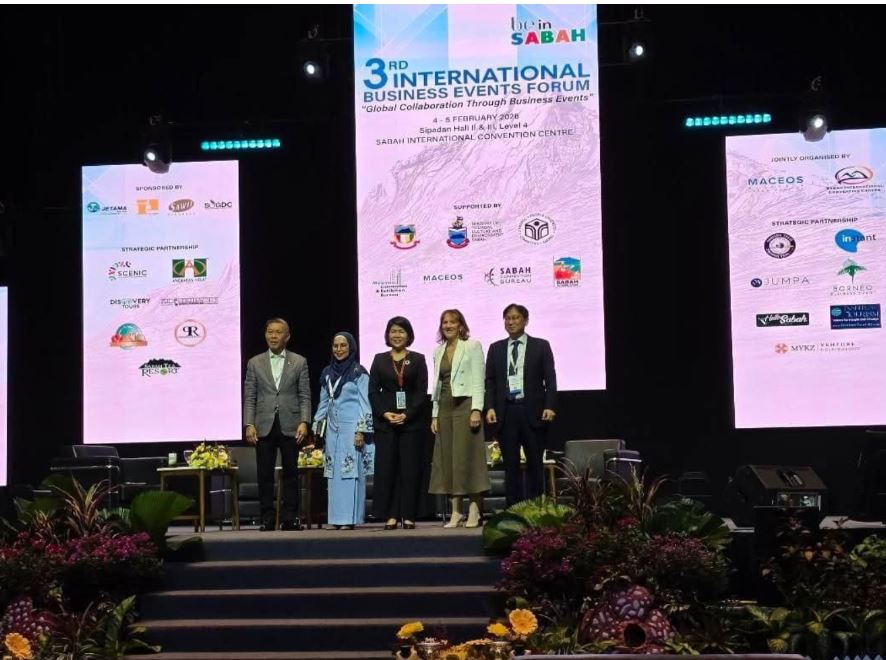
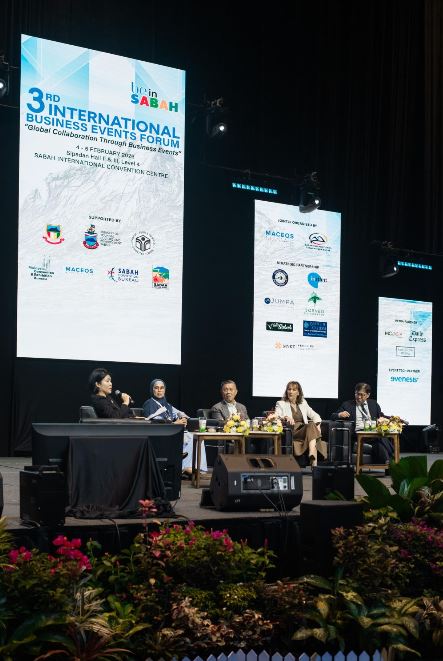
Red Tomato Media has the privilege to have attended the BE Forum 2026 at SICC, KK, Sabah, Malaysia. One of the many informative sessions was very interesting, as moderated by Cheryl Ellron, a UK-based Consultant. It was an honour to moderate Day 2 of the session on “Strategic Gap: How Associations Lead Business Events Industry Transformation.” said Cheryl, who shared the following notes and observations.
Together with four outstanding industry leaders, we explored the structural gaps that continue to shape — and sometimes constrain — the global business events landscape.
What became clear is this: in an era defined by cross-border collaboration, talent mobility, and accelerated knowledge exchange, associations remain one of the most powerful engines of industry transformation.
But only if they evolve.

Understanding the “Strategic Gap”
From my perspective within the business events ecosystem, the strategic gap is fundamentally about capabilities, knowledge, resources, and alignment.
It is the difference between:
- Where an industry currently stands
- And where it needs to be to remain sustainable, future-ready, and impactful
Closing this gap requires more than operational improvements. It requires strategic courage.
Associations sit at the centre of this transformation because they:
- Shape industry standards
- Convene knowledge communities
- Influence policy and professional development
- Drive long-term sector direction
Yet the question we posed during the session was both direct and urgent:
What is the most critical strategy gap associations must close to remain relevant in today’s fast-changing environment?
Diversification: The First Imperative
One of the strongest themes that emerged was diversification.
Associations can no longer rely on a single revenue model, a single geographic focus, or static programming formats. Diversification must occur across:
- Revenue streams (membership, sponsorship, education, digital platforms)
- Geographies (expanding into emerging markets)
- Engagement formats (hybrid, micro-events, digital learning ecosystems)
- Topic leadership (keeping content relevant and future-focused)
Strong topics must not only remain relevant — they must evolve in response to industry shifts.
The days of repetitive annual programming without strategic reinvention are over.
Relevance in a Rotating Association Market
Another key discussion centred on the increasingly competitive and rotating association market.
As major congresses and global meetings rotate destinations, emerging markets are asking:
How can we position ourselves strategically to compete for high-value association events?
Emerging destinations must:
- Align national development priorities with association themes
- Build sector strengths that create natural bidding advantages
- Invest in knowledge clusters that reinforce credibility
- Offer measurable legacy outcomes
The most successful examples are those where events are not isolated gatherings, but catalysts for sector development.
One powerful case shared during the session involved a medical-themed event that successfully combined:
- Education
- Industry advancement
- Local capacity building
- International research collaboration
This was not simply a conference — it was a strategic knowledge platform.
Intentional Legacy: Beyond Tourism Impact
Traditionally, destinations pursued business events primarily for tourism impact. But the conversation has shifted.
Today, destination bureaus are increasingly focused on:
- Economic transformation
- Talent development
- Research advancement
- Industry competitiveness
- International positioning
Associations play a critical role here. They are not just event owners — they are knowledge curators and sector accelerators.
From a destination bureau perspective, associations:
- Attract high-value global thought leaders
- Anchor sector reputation
- Enable global partnerships
- Deliver long-term intellectual capital
But impact must be monitored and measured.
Monitoring frameworks, legacy mapping, and outcome evaluation are no longer optional — they are governance requirements.
Sustainability: Governance, Membership and Revenue
Another strategic gap lies in sustainability.
Sustainability is not only environmental — it is organisational.
Associations must address:
- Governance structures that enable agility
- Membership models that reflect evolving professional needs
- Revenue strategies that reduce dependency risk
Without strong governance, associations cannot innovate.
Without evolving membership value, relevance declines.
Without diversified revenue, transformation stalls.
Sustainability is therefore deeply strategic.
The Critical Gap: Alignment
If one overarching gap stood out, it was alignment.
Alignment between:
- Association mission and destination strategy
- Industry needs and programming
- Governance and innovation
- Legacy outcomes and measurement
Where alignment exists, transformation accelerates.
Where it does not, stagnation sets in.
Associations must continuously ask:
- Are we future-focused or tradition-bound?
- Are we serving members or preserving structures?
- Are we measuring real impact or celebrating attendance numbers?
Associations as Engines of Transformation
The business events industry is no longer only about convening — it is about advancing.
In a world shaped by geopolitical shifts, digital acceleration, and sector convergence, associations are uniquely positioned to:
- Close knowledge gaps
- Mobilise global talent
- Drive sector standards
- Enable cross-border collaboration
- Influence policy conversations
- Accelerate industry transition
But to lead transformation, associations must first close their own strategic gaps.
Final Reflection
Moderating this session reinforced a powerful truth:
Associations are not peripheral to the business events ecosystem — they are central to its evolution.
The challenge is not whether associations matter.
The challenge is whether they are prepared to adapt fast enough to remain indispensable.
The future of business events will not be defined solely by destinations or venues — it will be defined by the strength, agility, and strategic clarity of the associations that lead them.
By: International Correspondent: Cheryl Ellron