Business Events And Trade Exhibitions Can Help Government Safeguard Malaysia’s Visitor Economy Amid Global Uncertainty
As conflict in the Middle East and broader geopolitical uncertaintyweigh on global travel sentiment, the business events sector is proving to be one of the most effective levers governments can use to protect visitor economy resilience. The Malaysian Association of Convention and Exhibition Organisers and Suppliers (MACEOS) said business events such as trade exhibitions, conventions, conferences and association meetings provide a more stable and higher-value stream of arrivals because they are driven by commercial purpose, investment objectives and professional commitments.
Unlike purely discretionary leisure travel, business travel is typically planned further ahead, tied to contracts, market access, industry networking and knowledge exchange, and therefore tends to remain more resilient during periods of geopolitical volatility. For government, this makes business travellers an important stabilising segment – helping cushion pressure on hotels, airlines, venues, restaurants, retailers and tourism-linked jobs when leisure demand softens.
This resilience builds on Malaysia’s strong performance in the preceding year, when the country benefited from the momentum of ASEAN-related meetings and a broader calendar of corporate and association events.
Alongside government-led meetings, Malaysia’s business events sector in 2025 welcomed more than one million international delegates through as many as 2,000 incentive travel, exhibitions, conferences, and association meetings, contributing RM18 billion to the Malaysian economy.
The industry has also supported 50,000 jobs nationwide, underlining the sector’s importance not only to tourism, but to the wider national economy and the thousands of SMEs that power the visitor economy supply chain.
Trade exhibitions, in particular, should be viewed as strategic economic instruments rather than stand-alone events. They bring qualified buyers, investors, exhibitors and decision-makers into the country, sustain demand for accommodation and transport, support restaurants and retailers, and create direct opportunities for trade, investment and export growth. In times of international uncertainty, government can leverage these platforms to protect demand, preserve market confidence and keep economic activity flowing across multiple sectors.
Each delegate typically generates up to four times the economic value of a standard leisure visitor through extended stays and higher-value spending on accommodation, dining, logistics and professional services. This multiplier effect makes business events a powerful tool for government to strengthen resilience in the visitor economy while also advancing national trade and investment priorities.
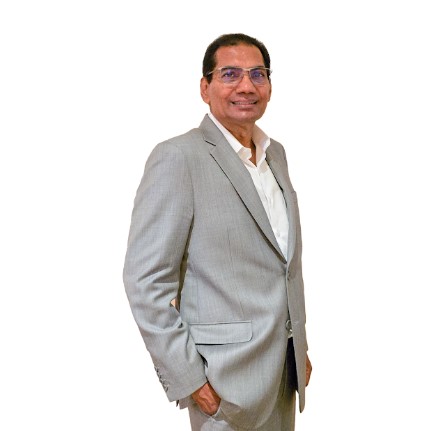
Datuk Dr. M Gandhi, MACEOS President, says: “When geopolitical tensions rise and leisure demand becomes more vulnerable to shifts in sentiment, governments need dependable drivers of visitor economy activity. Business events provide that resilience. People travel for business with clear commercial objectives, and trade exhibitions in particular help protect hotel demand, air connectivity, urban spending, jobs and SME livelihoods. At the same time, they create a platform for investment promotion, trade expansion, knowledge exchange and international partnership building.”
“This is why business events should be treated as a strategic national economic tool, especially
during periods of regional instability. By securing and supporting the right exhibitions, conventions
and industry gatherings, government can do more than sustain tourism flows; it can protect
economic momentum and reinforce Malaysia’s position as a trusted regional hub for commerce and
collaboration.”
MACEOS reaffirms its commitment to working with government and industry partners to position
Malaysia as Asia’s leading business events destination. In the current global climate, business
events are not only engines of growth but also instruments of resilience – helping Malaysia shield its
visitor economy from external shocks while continuing to attract trade, talent, investment and global
engagement.